
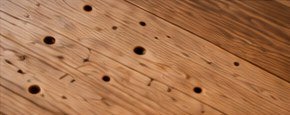
Signs of woodworm
- Small round exit holes in the surface of the timber
- Fine, gritty dust (known as frass) near the holes or on the floor below
- Timber that feels soft, crumbly or weak
- New holes or fresh pale dust appearing over time
Old holes do not always mean an active infestation, so the first step is to check the timber properly.
How we treat it
- Inspect. We look at the extent of the problem and whether it is active.
- Treat. We apply a specialist woodworm treatment to the affected timber.
- Restore. Where you want it, we sand and refinish the floor so it looks good and is protected.
Why treatment comes before sanding
Sanding does not remove woodworm. The timber needs treating first, and then sanding and a finish bring the floor back to its best. Because we do both, you can have the treatment and the finished floor as one project.
Period and older floors
Woodworm is most common in older timber. If you have a period home in Hexham or elsewhere in Northumberland, read about our floor restoration service as well.